
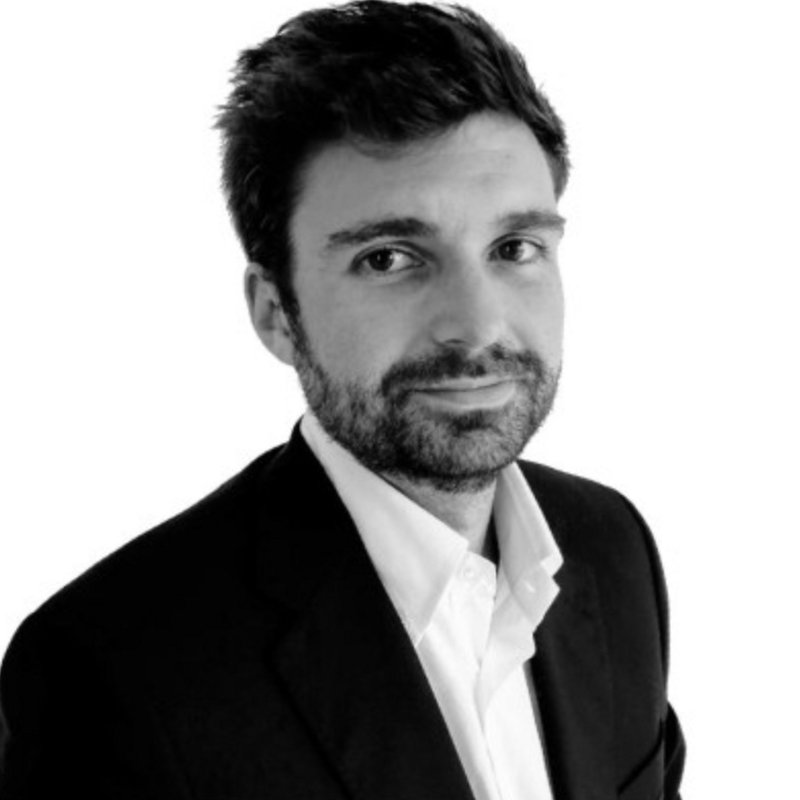
Francisco’s intellect exists in a realm few inhabit: the true definition of a gifted mind unleashed Into the world.
A relentless, focused mind that moved fast and far. PhDs, hedge funds, market inefficiencies spotted and seized. With a brain running at 200 mph, he excelled at scanning for risk, holding tension, solving problems, and finding structure in chaos. And that worked. For a while.
Now he’s exploring a different intelligence. One that isn’t just about winning, but about waking up. Slowing down. Softening. Bringing presence to the places performance once occupied.
His journey is compelling because he’s been on both sides: the achievement-driven performer who measured worth through outcomes, and now someone discovering that “being the best is not the same as being whole.”
It’s important for those of us who navigate the world differently to pay attention to the younger ones who do too. Francisco’s words to his teenage self reveal what many neurodivergent kids, gifted or not, need to hear: “You’re not too intense — you’re just in the wrong room.”
In this conversation, there’s room for every kind of mind. Here’s Francisco in that vibrant space between who he was and who he’s becoming.
Gus
Bird’s Eye View
Can you give us a glimpse of your life story?
I took on responsibility early. Earlier than most.
My parents did the best they could (with the information, resources, and internal worlds they had at the time). And while I have no doubt they loved me in their own ways, the emotional environment I grew up in was complex.
Affection wasn’t physical. Connection often came through performance. I was seen, deeply, but often through the lens of potential rather than presence. And from a young age, I absorbed the sense that being better, doing more, or understanding things others couldn’t, was the safest way to belong.
There were also dynamics that made me grow up fast: exposure to stress, criticism of others, financial challenges that fell into my lap before I even had a real chance to understand money. I was introduced to debt before I was introduced to freedom. That left a mark.
I don’t know if I was born neurodivergent, or if my brain adapted to what it needed to survive. But what I do know is that I became incredibly good at scanning for risk, holding tension, solving problems, and finding structure in chaos. I was the one who stayed calm, took control, fixed it.
And that worked. For a while.
But in recent years, I’ve been learning to unhook from that compulsion. To see that performance and responsibility aren’t the only paths to love or connection. That softness and uncertainty aren’t threats; they’re parts of being fully alive.
I still have the machine in me — the one that calculates, optimizes, protects. But now I’m letting it serve me, rather than define me. And slowly, I’m learning to feel safe without needing to fix everything first.
Your mind runs at 200 mph. Do you ever stop just to feel the stillness?
My mind rarely slows down. I’ve tried to create stillness through meditation, better routines, exercise, and clean habits; including cutting alcohol completely, which I realized was just feeding the dopamine loop in ways that weren’t sustainable.
Still, it’s a challenge. Especially now, with a one-year-old daughter. Her presence has made it even more clear how deep the need for stimulation runs in me. These days, that craving often gets redirected into work (which feels more useful, more “productive”) but it’s still driven by the same underlying mechanism.
Some of this goes back a long way. The environment I grew up in didn’t always allow space for softness or pause. My parents did the best they could with what they had, but I quickly became the one who managed, who held things together. I learned to earn safety through performance.
Whether that shaped how my brain works, or simply revealed it, I don’t know. But I’ve carried that same intensity forward into everything I do.
Now, I’m trying to let go of the idea that stillness has to be earned, or justified. I want to be present not just for my daughter, but for myself. And while I haven’t mastered it, I’m learning. Slowly. With more gentleness than before.
Learning and Reinvention
What does learning mean for you? And how do you learn?
For me, learning isn’t just acquiring new information, but changing how I relate to the world.
It often starts with friction. A mistake, a pattern I can’t ignore anymore, a mirror held up by someone else. From there, I usually dive deep: research, reflection, experimentation. I learn by obsessing, by finding the edges, pulling things apart, and rebuilding from first principles.
But over time, I’ve realized that real learning also requires unlearning: letting go of the systems I built to protect myself when I didn’t feel safe. It means allowing discomfort without rushing to solve it. It means staying open even when I want to control.
I used to think learning was about becoming more capable. Now, I see it as becoming more honest — with myself first, and then with others. It’s not about knowing more. It’s about seeing more clearly.
As a gifted kid, what felt most alien in the world of “normies”?
The part that felt most alien was the slowness; not of thinking, but of curiosity.
It wasn’t that others didn’t understand things. It’s that they didn’t seem to care. I’d want to go ten layers deep on something — not because I was trying to show off, but because I genuinely needed to understand how it all worked, where the cracks were, what was underneath the surface. And most of the time, I’d be met with indifference. Shrugs. Surface-level interest. People satisfied with answers that, to me, only raised more questions.
That made me feel both lonely and responsible. Like I had to carry questions no one else seemed to want to ask. And sometimes I’d even start dimming that intensity, just to fit in. Only to feel more disconnected for doing it.
There was also a deep discomfort with systems that rewarded obedience over insight, or repetition over originality. School often felt like being trained to sit on my own energy, not to trust it.
The hardest part wasn’t being different.
It was feeling unseen for the kind of difference that came from caring too much. But in a way that people still did not appreciate.
Name a skill that refused to bend to your will. How did it bend you instead?
Stillness is the one skill that consistently refused to bend to my will.
I approached it the way I approached everything else: with focus, discipline, and structure. I meditated, I adjusted my routines, I trained my body and refined my habits. But none of it gave me control over stillness, because stillness doesn’t respond to control.
Instead, it asked for something I wasn’t used to offering: surrender. It required softness where I was used to strength, patience where I was used to speed. And in resisting that, I discovered something about myself — that a part of me feared stillness, not because it was unproductive, but because it left me with no place to hide.
Stillness didn’t make me more efficient or high-performing. It made me more aware. It held up a mirror. And in that quiet reflection, I started to see the parts of me that were working too hard to prove I deserved to stop.
It didn’t bend. I did — or, at least, I have been trying really hard to. And I’m getting better and better for it.
Neurodiversity and Self-Awareness
How has owning your neurodiversity rewired your life and work?
Owning my neurodiversity has been less about diagnosis and more about recognition — of patterns, needs, and truths I had spent years trying to outgrow or outwork.
For most of my life, I treated my intensity as something to manage, my sensitivity as something to suppress, and my obsessive focus as something to channel only if it produced visible results. I built systems around myself to stay “functional,” not realizing those same systems were often stifling my humanity.
But the moment I stopped pathologizing how I experience the world, and started understanding it as a way, not a flaw, everything shifted.
In my work, I stopped forcing myself into models that didn’t fit. I began designing my environment around how my brain actually works: bursts of deep focus, rest that isn’t negotiable, structure that allows flexibility without chaos. I stopped pretending I could do everything, and started building around my edge.
Personally, it allowed me to soften. To stop performing normality. To honour the part of me that feels everything deeply, questions everything twice, and needs meaning to move.
Owning my neurodiversity didn’t give me new tools. It gave me permission, to stop fighting myself and start building with myself. Finding the systems that can optimize me further given who I am, and not in a way that made me burn out constantly and be always on the edge despite extremely “short-term” productive (in an outdated definition of productive…).
When overwhelm hits, what’s your fastest reset switch?
When overwhelm hits, my fastest reset is movement followed by silence.
I’ve learned that my mind runs too fast to slow down by thinking alone. So I start with the body: a short walk, stretching, sometimes even just standing up and shaking the tension out. It breaks the loop, shifts the chemistry, and reminds me that I have a body, not just a brain.
Then comes the pause. No phone, no input, no solving — just a moment of stillness to let the noise settle. Even a few deep breaths with my eyes closed can create enough space for clarity to return — breathing is a crucial part of the control that is needed to slow down.
It’s simple, but it works. The body resets the mind. And stillness lets me listen again.
What cracked open the mind and let emotion flow in?
It wasn’t one moment, but a gradual erosion. The first real crack came from emotional exhaustion — holding everything together, performing competence, explaining feelings I couldn’t truly feel.
Eventually, that strategy broke. What cracked me open wasn’t insight, but being around people who didn’t need me to be impressive, just present. That safety allowed something unfamiliar to surface: emotion without explanation.
Funny enough, we tend to grow most when life gives us what we need, not what we want. The more intense the moment, the more it burns through. In 2020, I had $2 million stolen. It shattered my mask of “I’m enough because I achieve.” That slap to the ego was painful, and helpful.
Since then, I’ve been learning to let feeling coexist with thinking. Not to be ruled by it, but not to exile it either. It’s not weakness. It’s information I had been ignoring. It is still a daily struggle though, as any change is.
What would your teenage self have needed to hear to breathe easier?
You don’t have to earn your right to rest. You’re not broken for feeling too much or thinking too fast. You’re not too intense — you’re just in the wrong room.
The weight you’re carrying isn’t all yours. It’s okay to be the one who sees more, but you don’t have to solve everything. You’re allowed to be held, not just depended on.
You are much more than what you can prove. You already matter — even when you’re still, just being human.
From Winning to Wholeness
When did relentless optimisation start to feel hollow?
It started feeling hollow the moment I reached most milestones I thought would take me decades to achieve and felt nothing. Waiting for the end goal instead of enjoying the process has this tricky part: once we reach it, we see it as a means again, and define a new target, if we always live by ‘never enough’ mentality.
I had done what I set out to do: hit the numbers, solved the problem, crossed the line. But instead of fulfillment, there was just the quiet realization: “That didn’t fix it.”
It was especially clear after the big wins. The ones that should have validated everything. Instead, they exposed how much I’d been chasing relief, not meaning. Progress had become a substitute for presence. Achievement, a distraction from what I didn’t want to feel.
Relentless optimisation worked — until I saw what it was costing me: depth, connection, the ability to pause without guilt. That’s when I started listening differently. Not to what I could do next, but to what was actually missing.
What cracked the algorithmic armour and let vulnerability in?
It wasn’t a dramatic breakdown. It was subtle, and always inconvenient at the time.
What cracked the armour was the quiet accumulation of moments where success didn’t soothe me, where being right didn’t make me feel seen, and where performance stopped translating into connection.
Eventually, something gave. Not because I chose vulnerability, but because the old system stopped working. I couldn’t optimise my way through certain kinds of pain. I couldn’t analyse my way into feeling loved. I realised I was excellent at managing everything, except my own humanity.
And then came the first moments of letting someone in without needing to impress them. Being held in silence. Saying “I don’t know” without adding a plan right after. That’s what let softness in — not weakness, but relief.
Vulnerability didn’t rush in.
It crept in through fatigue, trust, and the longing to be met without needing to earn it.
Why go public with your messy side? and what’s flowed back?
I think, deep down, I just didn’t want to see others suffer in silence, just like I did for most of my life.
I was seen as different. As the one who achieved, who performed, who delivered. A kind of compliment machine. But not someone who was expected to speak about what was happening inside.
Like many men, especially those wired around drive and career, I didn’t know how to talk about what I was feeling. I didn’t even know where to start. And when I did try, I often felt more alone, not less.
So going public with the messy side isn’t just about helping others feel less alone; it’s definitely also for me. Speaking helps me hear myself. Verbalising brings order to what otherwise stays tangled. It’s not therapy. But it’s a way to breathe. And maybe, over time, to be known more fully; not just for what I do, but for who I am becoming. The reactions I get from those that thank me for opening up and appreciate the courage also make me very grateful and fulfilled, and that is all I can ask for — long-term fulfilment and happiness, more than dopamine spikes.
How do you score a game where nobody loses?
For most of my life, the only games I knew how to play were win/lose. From tennis courts to classrooms, everything was ranked, measured, and compared. I was trained (implicitly and explicitly) to win. To outperform. To be the best. And in many ways, I was. But it came at a cost.
I wasn’t taught connection. Or synergy. Or how to thrive with others instead of against them. I did not trust anyone and that made teamwork hard later on. Not because I didn’t value others, but because I simply hadn’t learned how to share space without measuring myself inside it.
I still remember a race where I placed third. The runner ahead of me took a wrong turn near the finish line. I didn’t warn him. I passed. I took the podium spot. And I felt super achieved, as the goal was to be third. But deep down, I knew I hadn’t really earned it. That moment stuck with me — not as guilt, but as a mirror. It showed me the emptiness of winning when it disconnects you from others.
So now, when I ask myself how to score a game where nobody loses, the answer isn’t about results. It’s about what’s built.
Did we grow together? Did I stay connected to myself and to the people around me? Did I contribute something beyond my own position?
That’s the game I’m learning to play now. But I still struggle with it constantly, let’s be clear. It’s harder. But it feels a lot more like life.
Past and Future
Can you share some of the major lessons you’ve learned in life?
Here are a few that have shaped me deeply — not just intellectually, but in the way I live, relate, and build:
1. Being the best is not the same as being whole.
I spent most of my life optimizing: for performance, outcomes, approval. It worked, until it didn’t. Achievement without self-connection eventually feels hollow.
2. You can’t out-think what needs to be felt.
For years, I tried to solve emotion with logic. Understand pain instead of feel it. But certain things don’t move until you let them move through you. Vulnerability isn’t weakness but what lets truth breathe.
3. Responsibility taken too early becomes identity.
When you grow up too soon, you learn to hold things that aren’t yours. Later, it’s hard to stop. Letting go of what you never should’ve carried in the first place is a kind of liberation most people don’t talk about. I wonder about how this connects to my neuro divergence, and I am pretty convinced, looking at many more examples around me, that it is a lot more about this than genetics.
4. Connection requires risking being seen.
You don’t get intimacy without exposure. You can impress people from a distance, but you can only be loved up close; and that means being visible even in your mess.
5. Long-term wins come from short-term honesty.
In life, work, or love, what you avoid now will cost you later. Naming what’s real early on, even if it’s uncomfortable, creates alignment that compounds.
6. Stillness is a skill, not a reward.
I used to think rest was something you earned once everything was done. It’s not. It’s something you practice, especially when part of you resists it the most.
7. The more you open, the lighter things get.
Not because life gets easier, but because you stop pretending you have to carry it all alone.
These aren’t just lessons I’ve learned. They’re ones I return to over and over because they don’t live in theory. That is the biggest challenge!
Which big questions do you have on your mind currently?
The hardest and most important ones are mostly structural rather than strategic. They sit at the intersection of identity, purpose, and systems. Some are quiet and personal. Others are loud, systemic, and still unresolved:
1. What do I want success to feel like, not just look like?
I’ve built toward outcomes for most of my life. But now I’m more interested in whether the process feels aligned, grounded, and human — not just impressive.
2. How can I lead without performing?
I know how to be responsible, how to deliver, how to win. But can I lead without needing to prove? Can I hold space without controlling it?
3. How do I design structures that protect depth and connection — even at scale?
Whether in a fund, a company, or a community, I don’t want to build fast if it costs integrity. So how do I hold both? Precision and softness. Systems and soul.
4. What am I still doing just to be seen?
This one stings. But I ask it often. Because not everything I’m good at is rooted in authenticity; some of it still belongs to the version of me that needed to be needed.
5. Where is my ego still sneaking in disguised as clarity?
When I talk about vision, conviction, or edge, how much of that is truth and how much is protection?
6. What does devotion look like when it’s not tied to urgency?
I’ve lived most of my life on intensity. But now I wonder what consistency, patience, and grounded momentum could feel like; without needing a crisis to catalyze it.
These are the questions I’m trying to live into.
How do you face the future? Do you make plans for it?
While my default is to overplan, as should be clear by now, my ideal approach is facing the future with a mix of design and surrender.
I do plan. I’m wired for it — I see patterns early, anticipate risk, and build structures that can hold complexity. It’s part of how I’ve survived, and part of how I create. But I’ve also learned that life rarely unfolds on schedule. And that clinging too tightly to a plan can make you blind to what’s actually emerging. But I aim to plan with intention, and I hold the outcome loosely.
I focus more on direction than destination. I aim to ask: What do I want to feel along the way? What kind of person do I need to become to hold what I’m building? And I try to stay close to what feels true, even when it’s slower, quieter, or less impressive than expected.
The future doesn’t scare me as much as it used to, that is for sure. Not because I’ve figured it out, but because I’ve stopped pretending I can control it (again, try to…!).
I aim to shape what I can, and meet the rest with awareness.